
AI for science: frontiers, opportunities and challenges
How can we harness the potential of AI to accelerate scientific discovery? The frontiers, opportunities and challenges of doing so will be discussed on Friday 19th November at a symposium hosted by Neil Lawrence, Deepmind Professor of Machine Learning here.
AI has the potential to become an engine for scientific discovery across disciplines - from identifying new phenomena in the stars, to helping understand the materials around us here on Earth, and from mapping the climate system to investigating our genetic code.
 Realising
these benefits will require new technologies, new collaborations, and
new interfaces between AI and the sciences. The Accelerate
Programme for Scientific Discovery, an initiative based here in
the Department, works to create these connections, developing AI
tools and methods that can enhance scientific discovery.
To explore recent advances in the application of AI for science and the ways in which the Cambridge community is deploying AI technologies, the Accelerate Programme is holding its first Annual Symposium on Friday 19th November, 13:00 - 16:00 GMT.
Hosted by Professor Lawrence, the event will feature a mix of invited talks and community-led 'unworkshops', as follows:
13:00 Welcome and introduction to Accelerate -
Ann Copestake (Head of this
Department) and Neil Lawrence
13:30 Alphafold and the frontiers of AI for science -
Pushmeet Kohli (Head
of Research AI for Science, Robustness, and Reliability, DeepMind) in
conversation with Neil Lawrence
14:30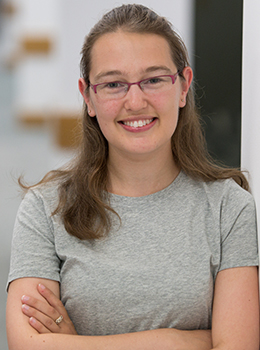 Community-led 'unworkshops'. Parallel sessions
will explore:
- AI for sustainable design and development (Discussion lead: Ramit Debnath, Department of Architecture and Judge Business School, University of Cambridge)
- Challenges for AI in science and mathematics (Discussion leads: Challenger Mishra (pictured top right) and Sarah Morgan (pictured below right) from this Department)
- Machine learning and the physical world: deploying AI in real-world contexts (Discussion leads: Ieva Kazlauskaitė, Department of Engineering, and Markus Kaiser from this Department)
15:30 Roundtable: issues and opportunities in AI for
science at Cambridge
16:00 Close
The symposium will be held online (via Zoom). Please register here to attend.
FAQs
What is an 'unworkshop'?
These are spaces for conference participants to set the agenda. They
can be seminars, talks, or discussion groups, on whatever topics are
exciting or interesting to you at the interface of AI and the
sciences. At the Accelerate Symposium, our unworkshop session will
provide a space for the AI for science community to share ideas. If
you’re interested in proposing a session,
please fill in the 'Expression of Interest form here - or email us
at
[Javascript required]
What support will Accelerate provide to 'unworkshop'
convenors?
The team will provide technical support, along with someone in the
session to help guide the discussion or activity.
How long will 'unworkshops' be?
They will last one hour. After the hour, we’ll ask workshop leads if
they would like to join us in a plenary session that explores the
topics covered by their session.
What can I do in an 'unworkshop'?
The 'unworkshop' is run at the discretion of the leader. These can be
through lectures, seminar format, activities - the session is
completely yours to explore.