
Blue Plaque Commemoration of EDSAC — Summer 2026
Overview
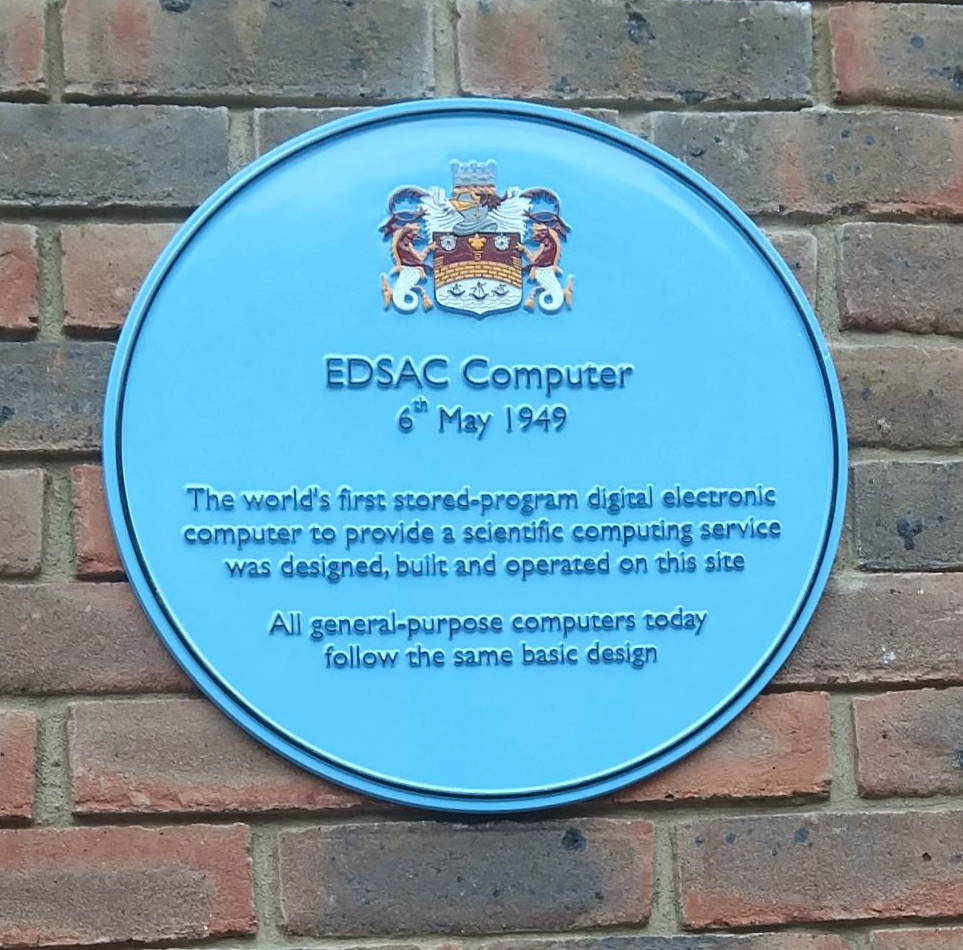
In June 2026, a blue plaque was placed in the location in central Cambridge where EDSAC was originally built. This means that Cambridge has a permanent memorial to the one of the earliest modern computers: one that helped pave the way for the use of computers as the ubiquitous tools we use today.
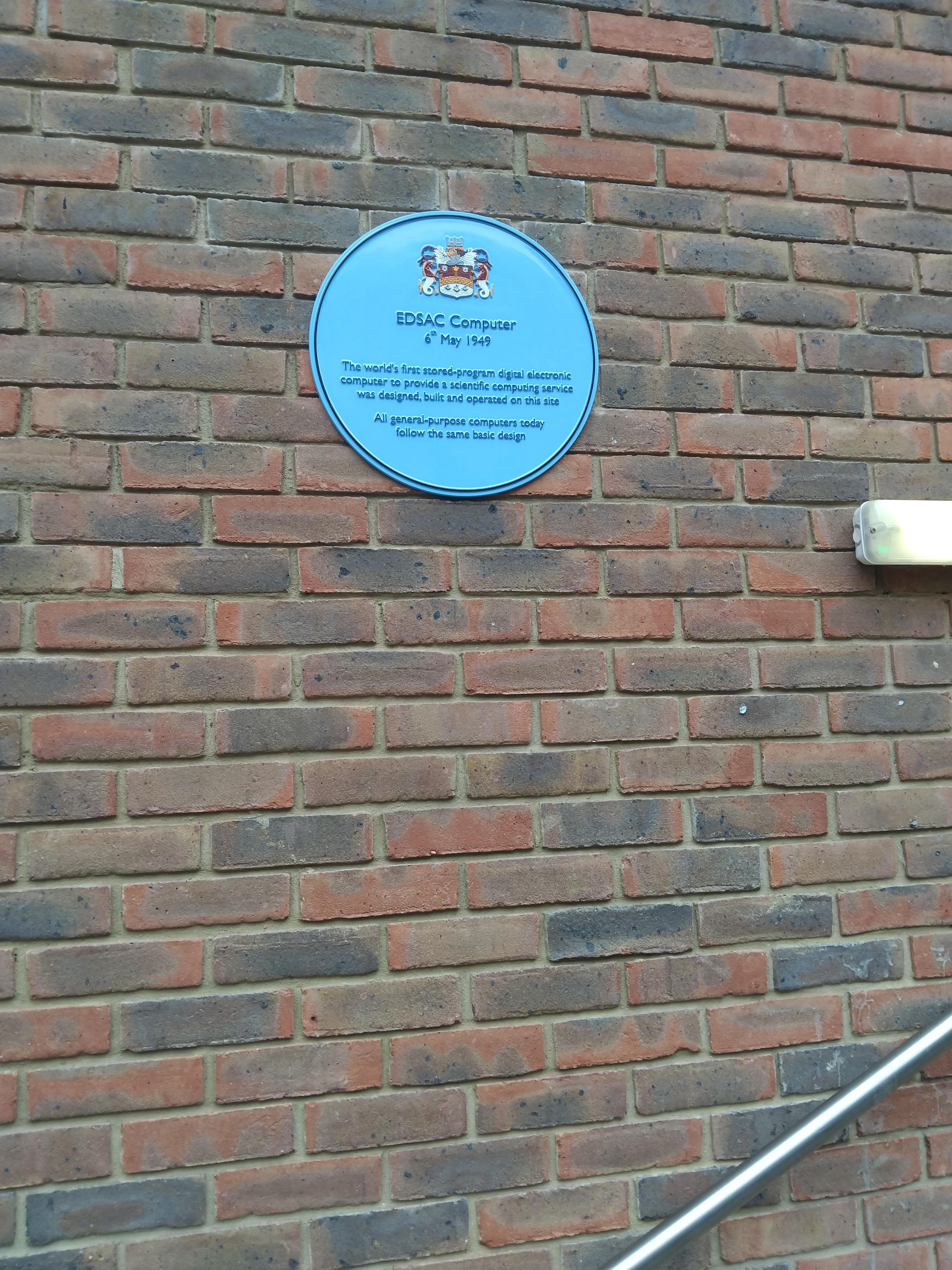 | The plaque is situated on the inside of the east run of buildings that form the New Museum Site. This is where the original Mathematical Laboratory stood (at the back of the Corn Exchange) and where the Babbage Lecture Theatre now stands. The Computer Lab moved into the Arup Building when that was built on the site of the old Laboratory. And in 2001, the department moved west to the William Gates Building. |
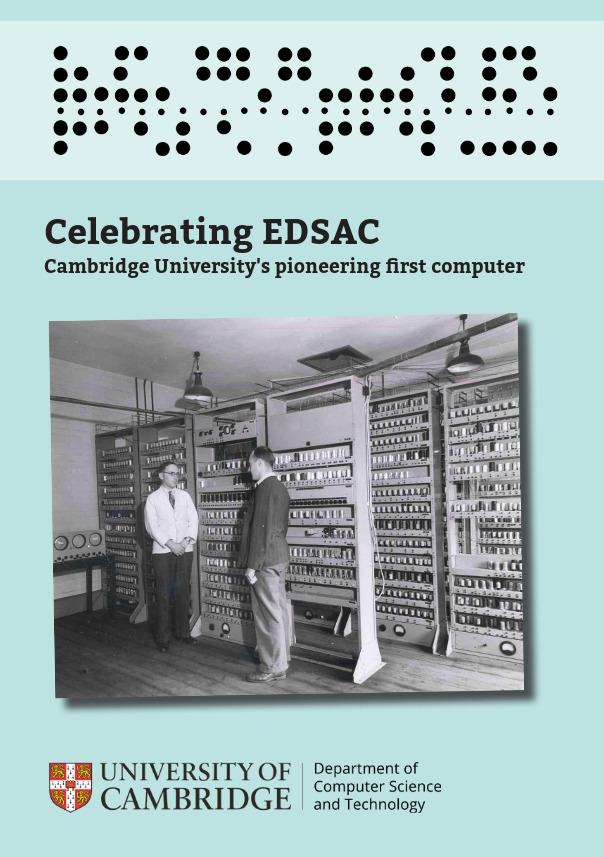
Booklet
A 20-page booklet was produced for the event: Download PDF
Video Recording
The event was recorded and can be seen on YouTube.
A few photos
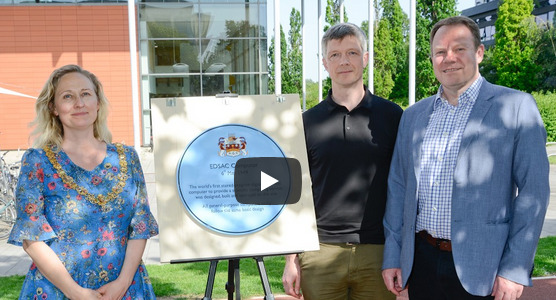
A relics exhitibion and celebratory tea were held in the 'Street' of the William Gates Building. There were several short talks in the lecture theatre, followed by the unveiling of the plaque by sponsor Robert Sansom.
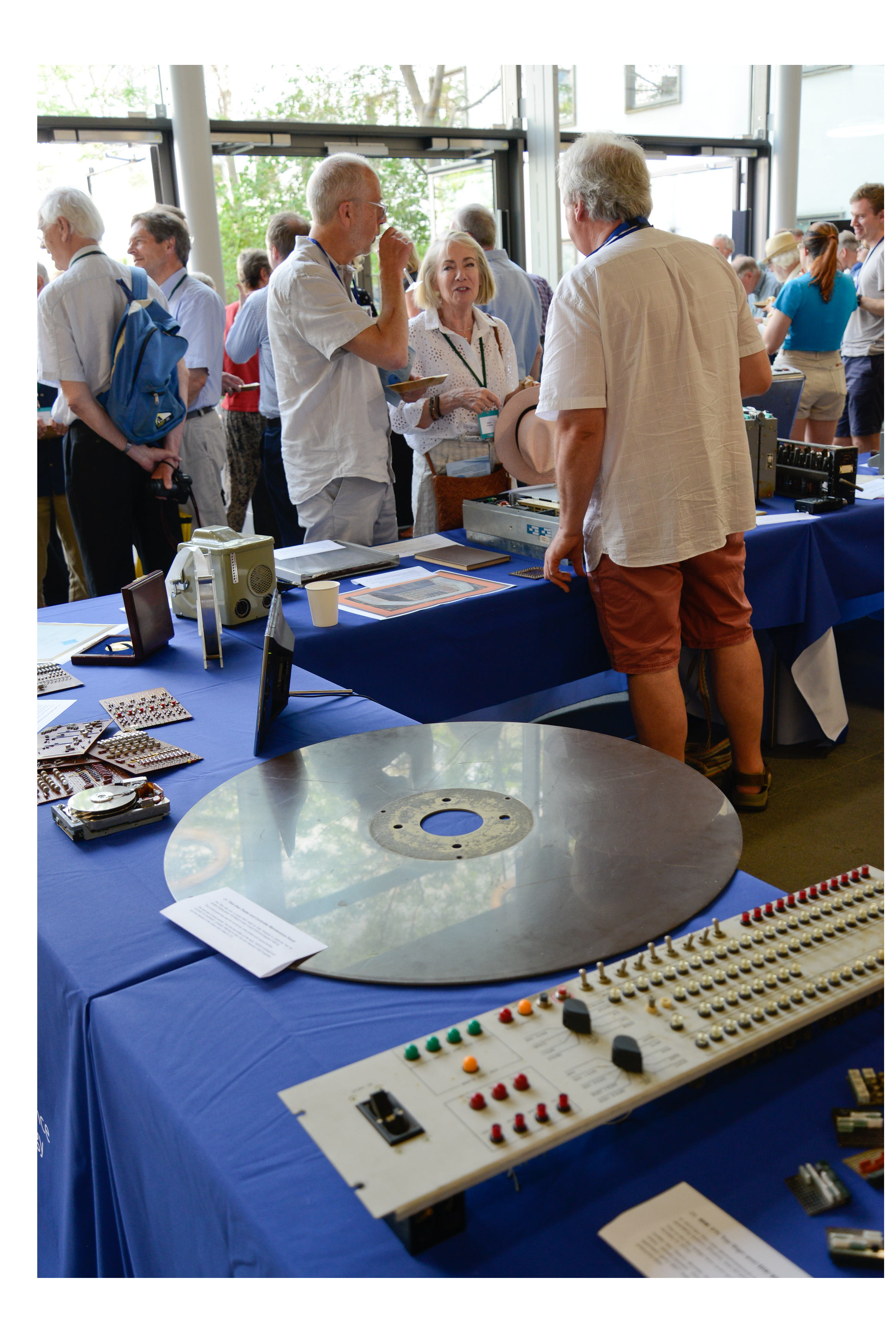
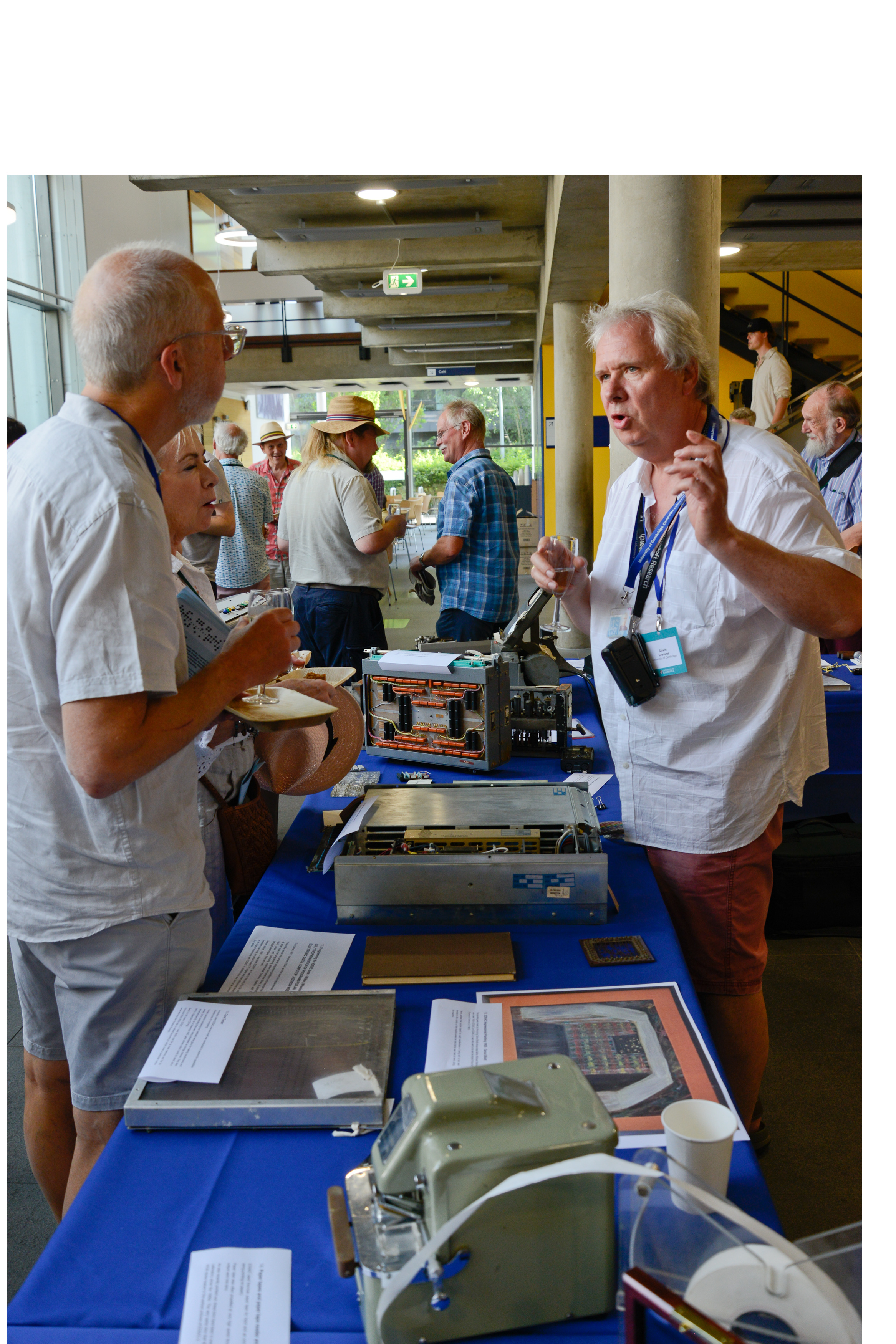
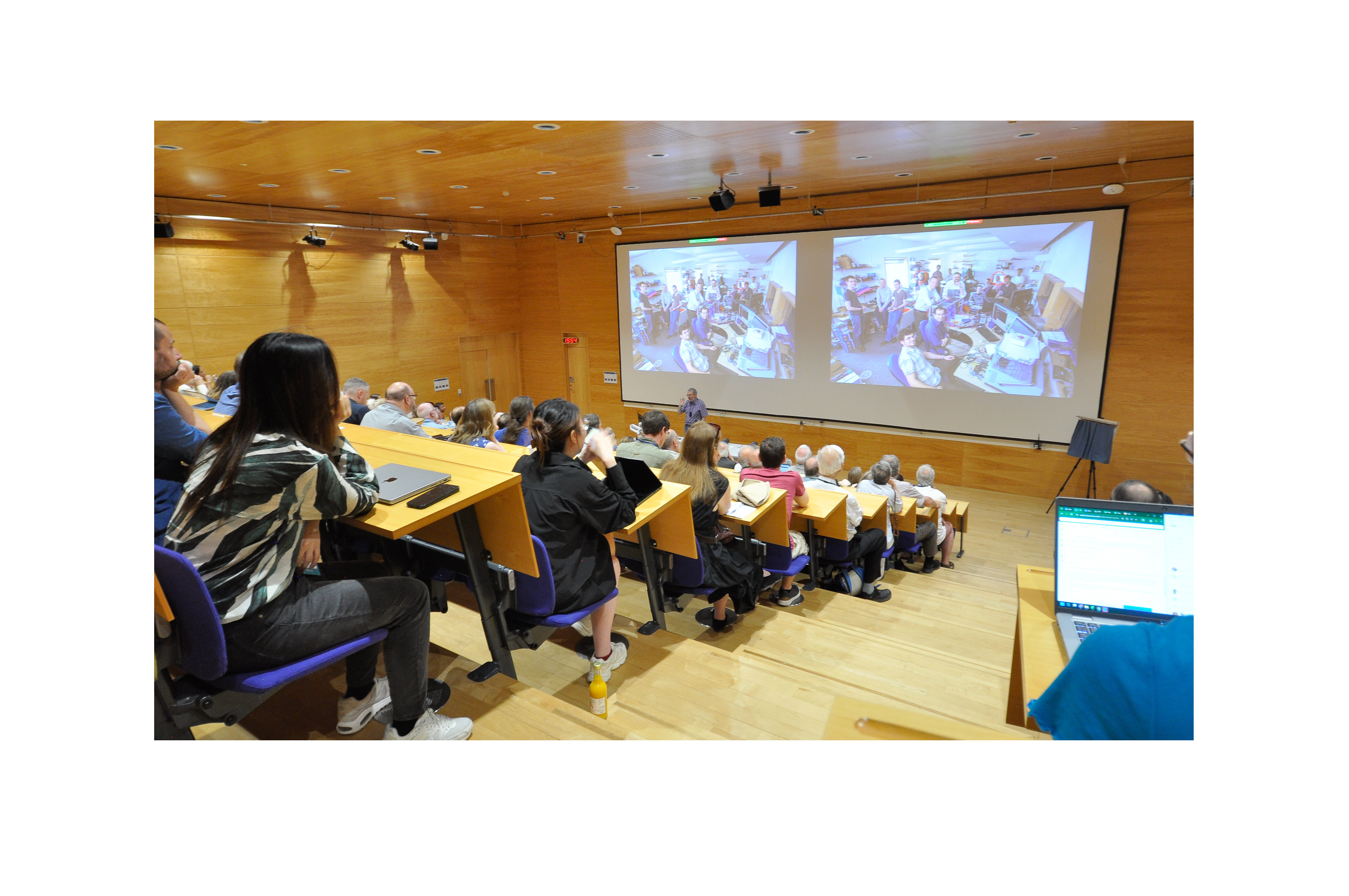
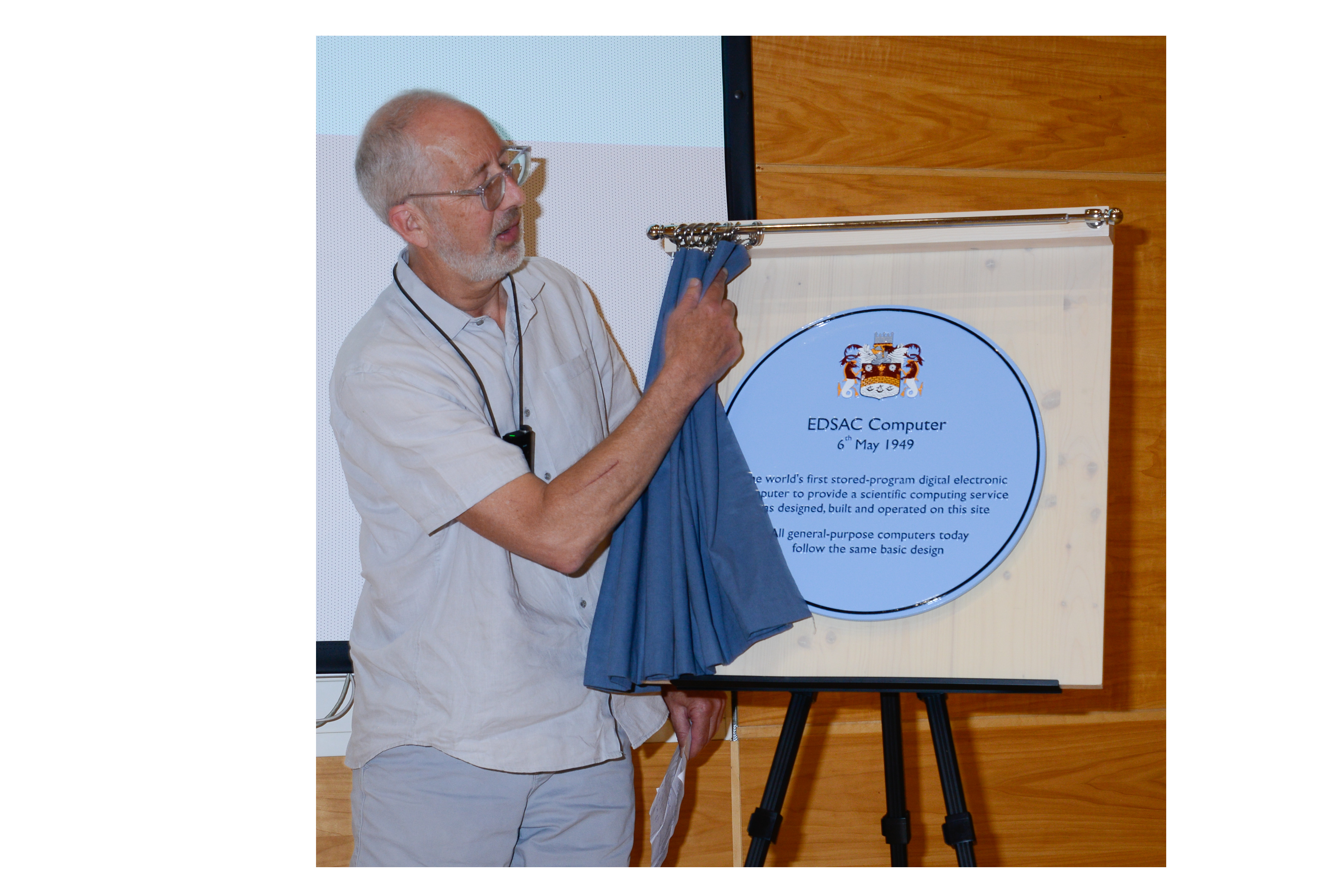
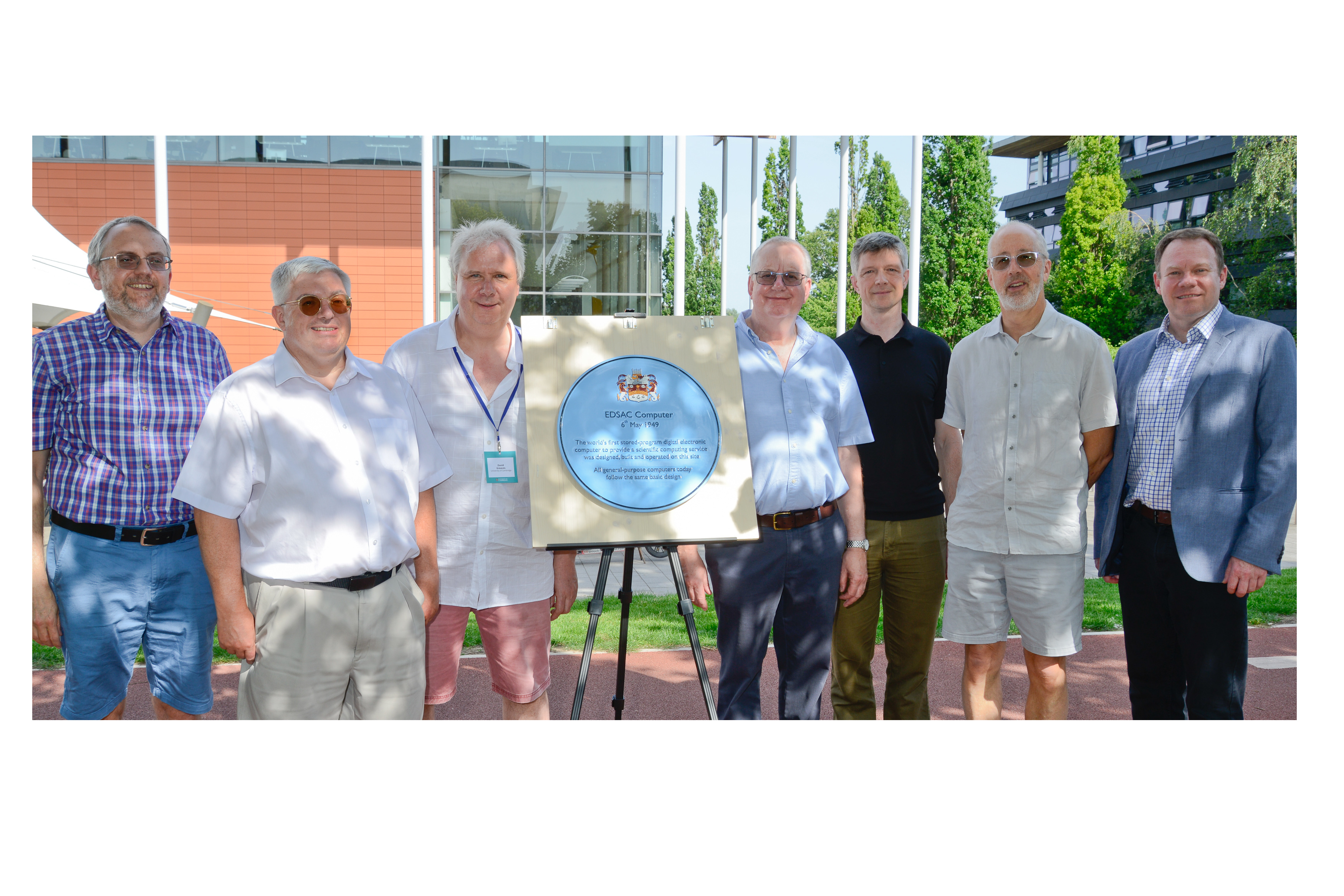
Click for larger versions. People appearing in these photos are Mayor Cleminson, Head of Department Alastair Beresford, Cllr Tom Bygott of CPP&F, Robert Sansom, David Greaves, Simon Moore, Mark Hayter and Andrew Herbert. Robert Sansom sponsored the event. Mark Hayter gave a talk emphasising the importance of EDSAC and then announced his endowment of a professorship and a PhD studentship. Both Robert and Mark are former members of the department who maintain very active links. [Photos by Perry Hastings.]
Papertape Logo for the Event
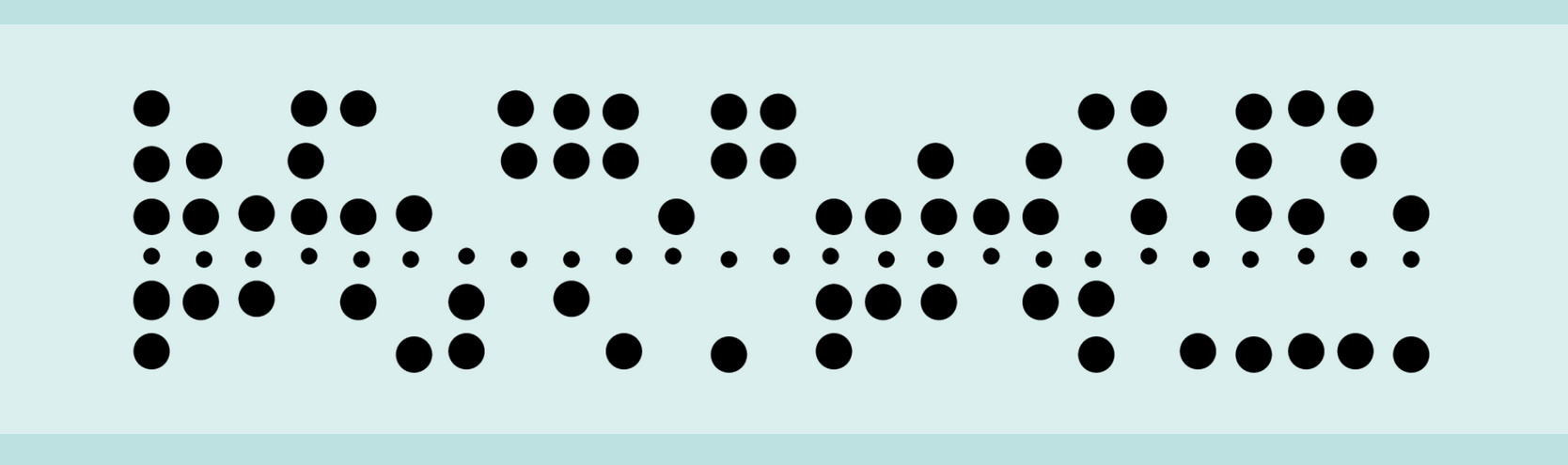
This papertape is written using EDSAC's 5-hole punch code. Can you decode it?
Cambridge & District Blue Plaques mark the people and events that have shaped the city and surrounding villages, making history visible in the streets where it happened. Run by local charity Cambridge Past, Present & Future, the scheme recognises contribution, context and connection, helping residents and visitors see Cambridge with fresh eyes.
(C) 2026 University of Cambridge, CC4BY. Relics Project Pages.