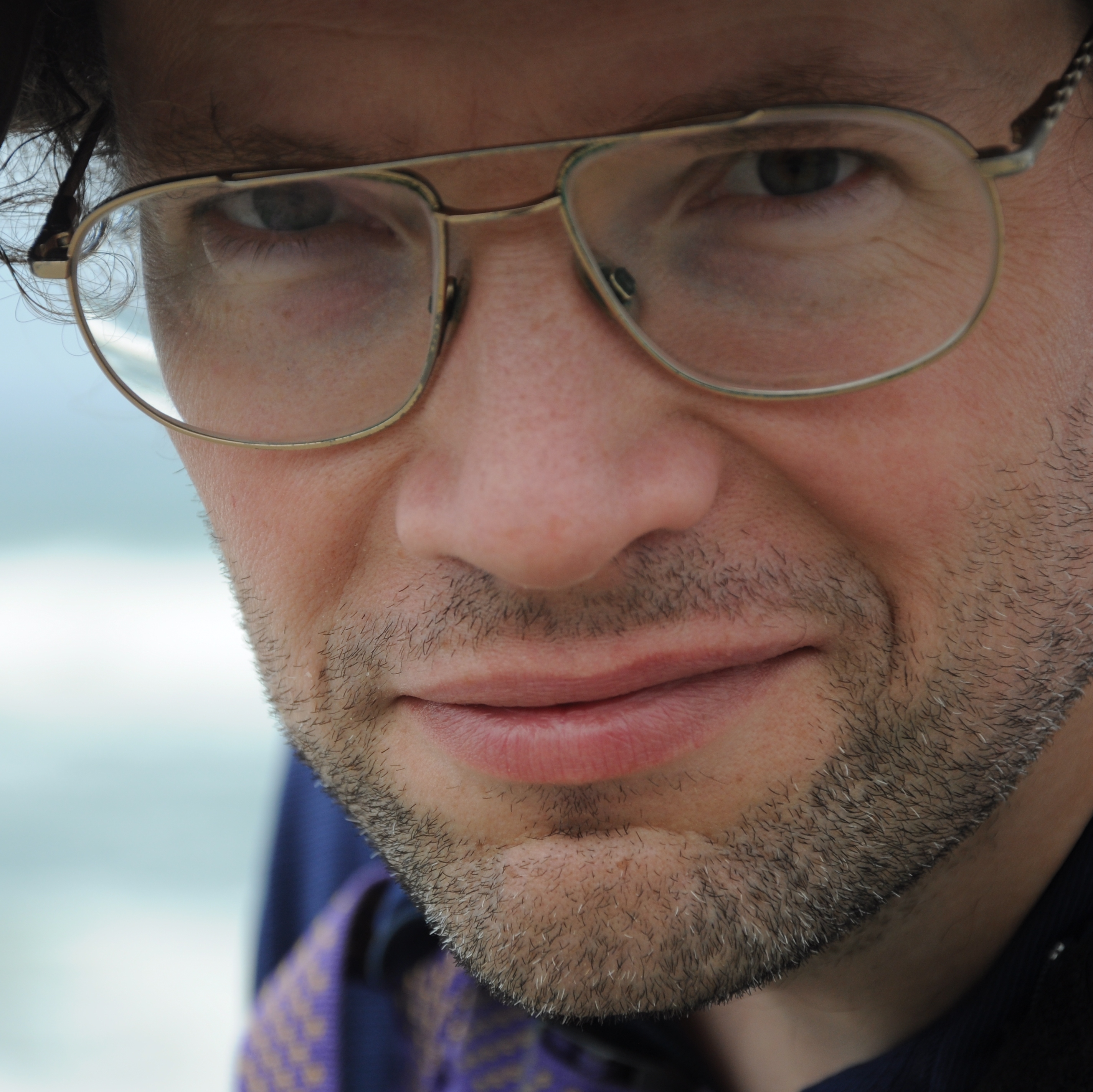
Peter Sewell
Professor of Computer Science,
Computer
Laboratory,
University of Cambridge
Member of the Cambridge
Programming, Logic,
and Semantics Group
Fellow of Wolfson college
Fellow of the Royal Society
Here are my contact details,
a
photo,
short bio, and
CV
REMS group (gallery)
Students and Postdocs (list)
Meetings
Funding
Group papers (by date)
Group papers (by topic)
Software
Teaching
Research
Our REMS group research aims to put the engineering of real-world computer
systems on better foundations, developing techniques (both
mathematically rigorous and pragmatically useful)
to make systems that are better-understood, more robust, and
more secure.
This applied semantics needs tightly integrated theoretical and practical
research, spanning a range of Computer Science:
architecture specification, programming languages, verification, security, and networking;
developing and using techniques from semantics, type systems, automated reasoning, and concurrency theory.
We currently focus on
hardware-architecture instruction semantics, especially for Arm and RISC-V, using Sail;
relaxed-memory concurrency for Arm, RISC-V, Power, x86, C/C++, Javascript, and Wasm;
C semantics with Cerberus;
verification and testing of C systems code with CN;
CHERI: Capability enhanced systems;
and critical systems code such as the Android pKVM hypervisor.
For all these, we're concerned with how one can specify the intended abstractions, and how one can use such specifications in design, documentation, testing, and proof.
 This is in collaboration with many academic colleagues
in Cambridge, Edinburgh, Aarhus, and elsewhere, and industry colleagues in Arm, Google, IBM, RISC-V International, and elsewhere.
REMS (Rigorous Engineering for Mainstream Systems) was originally funded by the eponymous EPSRC
REMS Programme Grant, with Imperial and Edinburgh; it continues with other funding, including the EU ERC AdG ELVER (2018-2024), the ERC/UKRI Frontier Guarantee AdG SAFER (2024-2029), and donations from Arm, Google, Intel, and Amazon.
This is in collaboration with many academic colleagues
in Cambridge, Edinburgh, Aarhus, and elsewhere, and industry colleagues in Arm, Google, IBM, RISC-V International, and elsewhere.
REMS (Rigorous Engineering for Mainstream Systems) was originally funded by the eponymous EPSRC
REMS Programme Grant, with Imperial and Edinburgh; it continues with other funding, including the EU ERC AdG ELVER (2018-2024), the ERC/UKRI Frontier Guarantee AdG SAFER (2024-2029), and donations from Arm, Google, Intel, and Amazon.
The CHERI
project, led by
Robert Watson,
Simon Moore,
and myself at Cambridge,
and Peter Neumann
at SRI International,
extends conventional hardware Instruction-Set Architectures (ISAs)
with new architectural features to enable fine-grained memory
protection and highly scalable software compartmentalization.
It is a hardware/software/semantics co-design project, involving
architecture design, hardware implementation, system software
adaption, and formal semantics and mechanised proof of security properties.
The UKRI Digital Security by
Design Challenge, with £70m government and £117m industry funding from 2019-2025, developed
the industrial prototype Arm Morello CHERI-ARM 64-bit CPU,
SoC, board, and software stack, to evaluate and demonstrate the mass-market industrial feasibility of CHERI.
Here are our DSbD
pages.
Recent REMS Group Papers
-
Escaping the Quicksand: A Call to Arms, Peter
Sewell and Jean Pichon-Pharabod, August 2026.
https://www.cl.cam.ac.uk/~pes20/2026-call-to-arms.pdf.
[ bib |
arXiv |
pdf |
http ]
-
Code-Specify-Test-Debug-Prove: Flexibly Integrating Separation
Logic Specification into Conventional Workflows.
Zain K Aamer1, Rini Banerjee1, Hiroyuki Katsura1, David
Kaloper-Meršinjak1, Dimitrios J. Economou, Kayvan Memarian, Dhruv
Makwana, Neel Krishnaswami, Benjamin C. Pierce, Christopher Pulte, and Peter
Sewell.
Proc. ACM Program. Lang., 10(PLDI), June 2026.
1 these authors contributed equally.
[ bib |
doi |
pdf |
http |
abstract ]
-
An Axiomatic Basis for Computer Programming on Relaxed Hardware
Architectures: The AxSL Logics.
Zongyuan Liu, Angus Hammond, Thibaut Pérami, Peter Sewell, Lars
Birkedal, and Jean Pichon-Pharabod.
ACM TOPLAS, January 2026.
[ bib |
doi |
pdf |
http |
abstract ]
-
ArchSem: Reusable rigorous semantics of relaxed
architectures.
Thibaut Pérami, Thomas Bauereiss, Brian Campbell, Zongyuan Liu,
Nils Lauermann, Alasdair Armstrong, and Peter Sewell.
In POPL 2026.
[ bib |
doi |
pdf |
github |
abstract ]
-
Ghost in the Android Shell: Pragmatic Test-oracle
Specification of a Production Hypervisor.
Kayvan Memarian, Ben Simner, David Kaloper-Meršinjak, Thibaut
Pérami, and Peter Sewell.
In SOSP 2025.
[ bib |
doi |
pdf |
abstract ]
-
Morello-Cerise: A Proof of Strong Encapsulation for the Arm
Morello Capability Hardware Architecture.
Angus Hammond, Ricardo Almeida, Thomas Bauereiss, Brian Campbell, Ian
Stark, and Peter Sewell.
In PLDI 2025.
[ bib |
doi |
pdf |
abstract ]
-
Precise exceptions in relaxed architectures.
Ben Simner, Alasdair Armstrong, Thomas Bauereiss, Brian Campbell,
Ohad Kammar, Jean Pichon-Pharabod, and Peter Sewell.
In ISCA 2025, Best paper award.
[ bib |
doi |
errata |
pdf |
abstract ]
-
ISO/IEC TS 6010:2025 Programming languages --- C --- A
provenance-aware memory object model for C, ISO/IEC JTC 1/SC
22.
ISO, May 2025.
Based on N3005: A Provenance-aware Memory Object Model for C.
Working Draft Technical Specification ISO/IEC TS 6010:2023 (E). Jens Gustedt,
Peter Sewell, Kayvan Memarian, Victor B. F. Gomes, Martin Uecker.
http://www.open-std.org/jtc1/sc22/wg14/www/docs/n3005.pdf. June 2022.
[ bib |
.html |
abstract ]
-
Arm systems semantics.
Ben Simner.
PhD thesis, University of Cambridge, April 2025.
[ bib |
doi |
errata |
pdf |
http |
abstract ]
-
Comprehensive Formal Verification of Observational Correctness
for the CHERIoT-Ibex Processor, Louis-Emile Ploix, Alasdair
Armstrong, Tom Melham, Ray Lin, Haolong Wang, and Anastasia Courtney,
February 2025.
[ bib |
arXiv |
http |
abstract ]
-
Towards general white-box automation: a typeclass-guided
context cleaner.
Thibaut Pérami.
In CoqPL 2025.
[ bib |
http ]
-
A CHERI C Memory Model for Verified Temporal
Safety.
Vadim Zaliva, Kayvan Memarian, Brian Campbell, Ricardo Almeida,
Nathaniel Wesley Filardo, Ian Stark, and Peter Sewell.
In CPP 2025.
[ bib |
doi |
http ]
-
It Is Time to Standardize Principles and Practices for Software
Memory Safety.
Robert N.M. Watson, John Baldwin, David Chisnall, Tony Chen, Jessica
Clarke, Brooks Davis, Nathaniel Filardo, Brett Gutstein, Graeme Jenkinson,
Ben Laurie, Alfredo Mazzinghi, Simon Moore, Peter G. Neumann, Hamed Okhravi,
Alex Richardson, Alex Rebert, Peter Sewell, Laurence Tratt, Murali
Vijayaraghavan, Hugo Vincent, and Konrad Witaszczyk.
Communications of the ACM, 68(2):40–45, January 2025.
[ bib |
doi |
http |
abstract ]
-
Fulminate: Testing CN Separation-Logic Specifications in
C.
Rini Banerjee, Kayvan Memarian, Dhruv Makwana, Christopher Pulte,
Neel Krishnaswami, and Peter Sewell.
In POPL 2025.
[ bib |
doi |
pdf |
abstract ]
Blog articles
-
Escaping the Quicksand: A Call to Arms, Peter
Sewell and Jean Pichon-Pharabod, August 2026.
https://www.cl.cam.ac.uk/~pes20/2026-call-to-arms.pdf.
[ bib |
arXiv |
pdf |
http ]
-
Formal CHERI: rigorous engineering and design-time proof of
full-scale architecture security properties, Peter Sewell,
Thomas Bauereiss, Brian Campbell, and Robert N. M. Watson.
Blog post,
https://www.lightbluetouchpaper.org/2022/07/22/formal-cheri/, July
2022.
[ bib |
project page |
http ]
-
Bad Reasons to Reject Good Papers, and vice
versa, Peter Sewell.
SIGPLAN PL Perspectives Blog, December 2021.
Also published 2022-12-07 on the Communications of the ACM Blog
https://cacm.acm.org/blogs/blog-cacm/267440-bad-reasons-to-reject-good-papers-and-vice-versa/fulltext.
[ bib |
http ]
Talks
-
On long-term research vision, Peter Sewell,
January 2026.
Talk at RTFM 2026 faculty mentoring workshop (Read the Faculty
Manual) with POPL 2026, Rennes, 2026-01-13.
[ bib |
pdf ]
-
Production language specification: requirements for multiple
usages, Peter Sewell, June 2025.
Talk at RPLS 2025 (Real-World Programming Language Specification),
with PLDI 2025, Seoul/remote, 2025-06.
[ bib |
pdf ]
-
Open problems from system software verification
, Peter Sewell, June 2024.
Talk at Iris workshop, Zurich, 2024-06-03.
[ bib |
pdf ]
Research Topics
I also maintain
a page of
Action
Calculi links.
Other
Another photo
[Validate this page.]