


The First Year
You sit three Computer Science papers (Papers 1, 2 and 3) and the Natural Science mathematics paper at the end of your first year.
Note that Papers 1 and 2 cover core Computer Science topics including foundations of computer science (taught in OCaml), Java and object-oriented programming, operating systems, discrete mathematics, algorithms, and digital electronics. The algorithms, ML, Java and digital electronics topics involve assessed laboratory work.
In Paper 3 you study further computer science in your first year and have a greater choice of papers or modules in your third (and optionally fourth) years. Paper 3 includes computer graphics, human-machine interaction, databases and machine learning.
Pre-Term On-line Course
You will be registered for an on-line course in the September before you come up into residence in Cambridge. This contains fundamental material that those who have taken A-level CS will already be familiar with. It also includes set-up information for the programming environments that will be used in the first year, including Java and ML. It includes a moderated forum where people can post questions and seek assistance. The course materials and chat room are hosted on the University's Moodle platform.
First Year Practicals
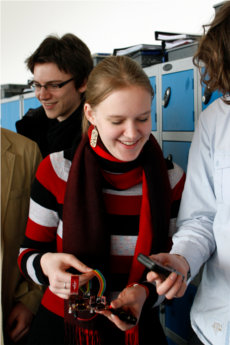
In the first year, you will take practical classes. Each week we provide computer facilities and demonstrators to help you through a series of assessed exercises across a broad range of topics. This includes hands-on programming experience in ML and Java as well as building a series of electrical circuits in the hardware practicals. Each practical contains a core set of tasks that everyone completes as well as a few optional exercises to challenge you if you found the core task easy.
As well as time-tabled practical classes, an online chat room is available 24/7 for you to discuss any issues with your peers. It is moderated by demonstrators who will provide help should the discussion go off course and also ensure that outright solutions to exercises are not posted!
Paper 3 is largely taught using practical classes. Again demonstrators are present to help individuals who get stuck or need something explaining. But the Lecturer is also present to start each session with either a formal lecture or else a quick kick-off introduction to the material which you may then follow at your own pace.
For the full course details for the current year, see the syllabus booklet.