
Projects
Quantifying reality of ultra-realistic 3-D displays - the effect of resolution and contrast
Joseph G. March(1), Dounia Hammou(1), Simon J. Watt(2), and Rafał K. Mantiuk(1).
(1)University of Cambridge, (2)Bangor University.
Accepted to SIGGRAPH 2026.
Abstract
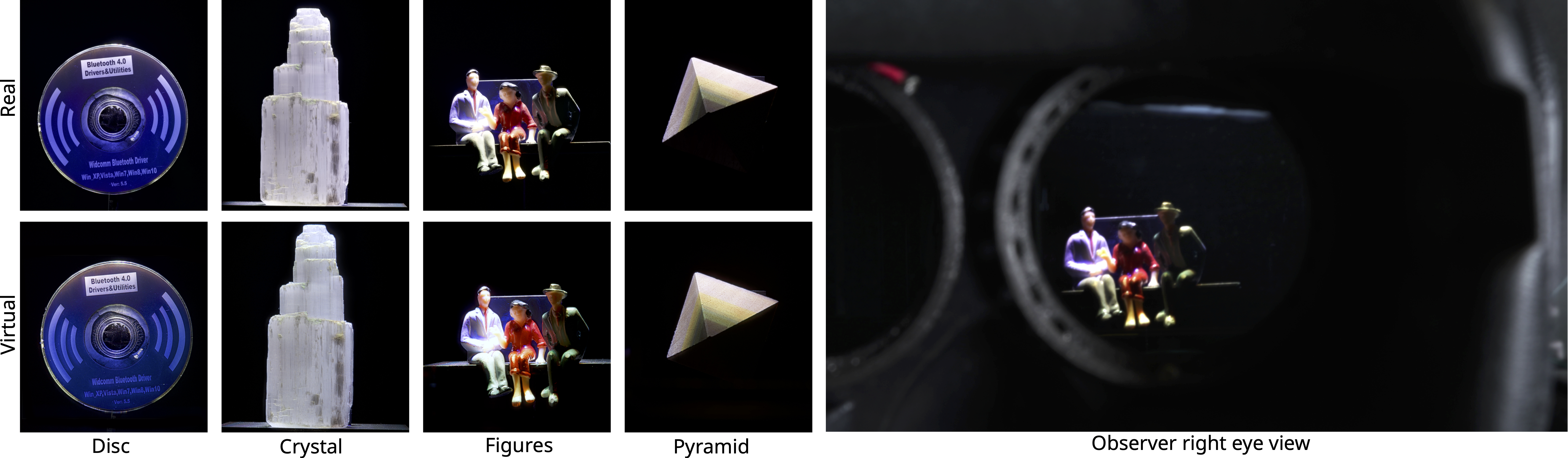
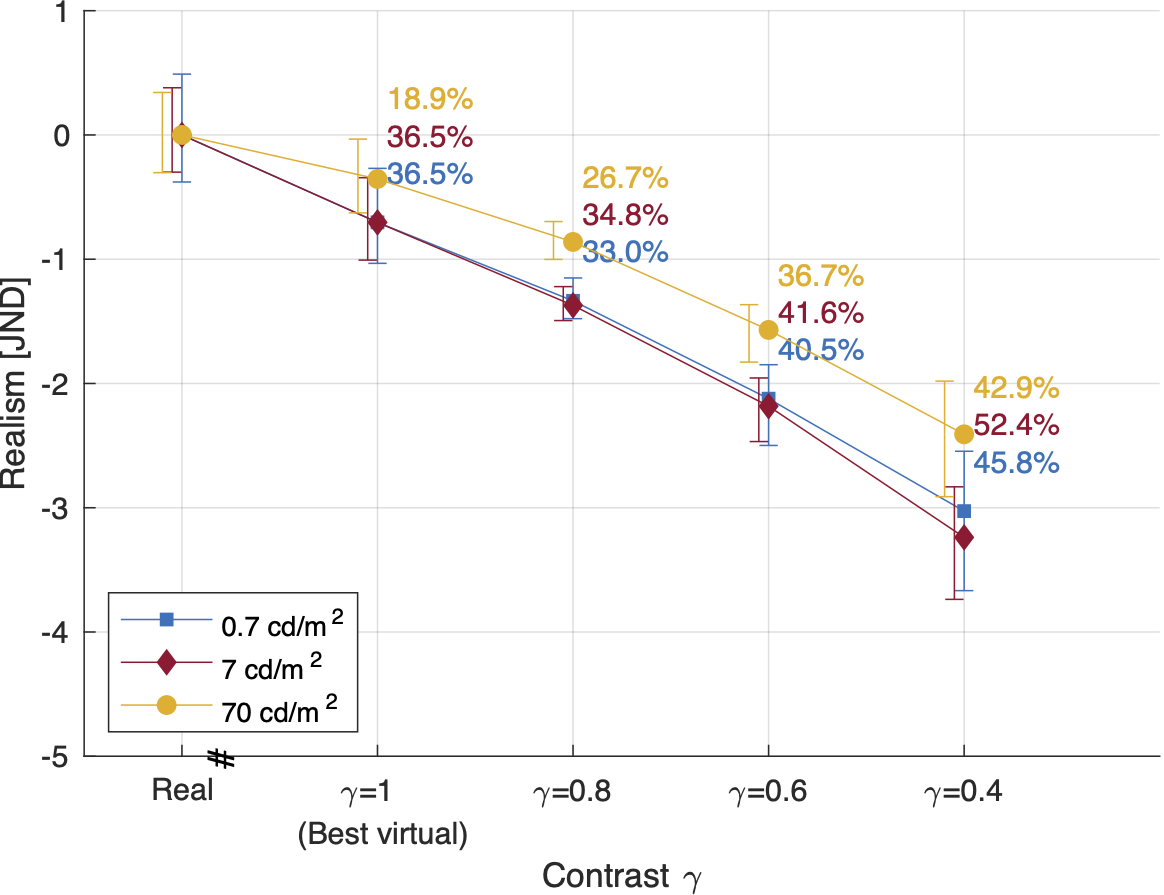
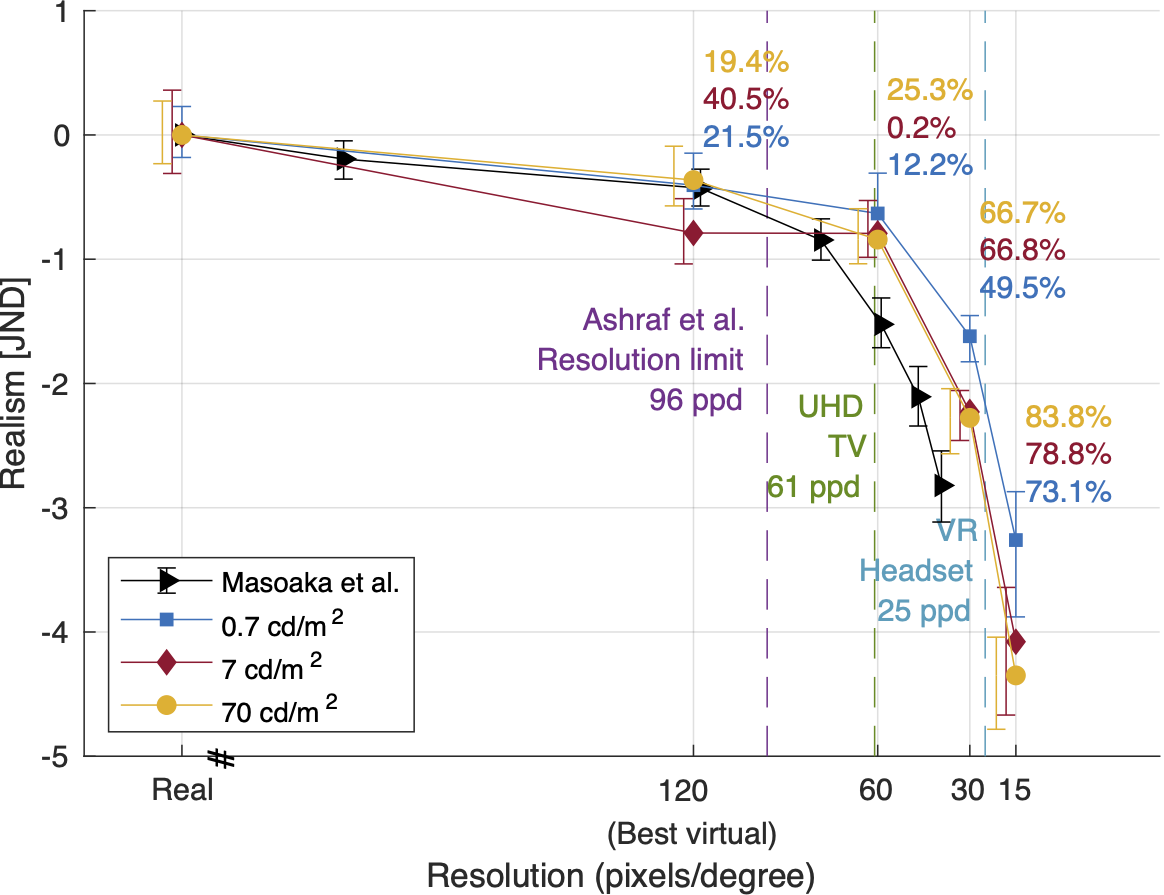
Developments in display technology mean that it may soon be possible to create stereoscopic 3-D imagery that cannot be distinguished from its real-world counterpart, i.e., it could pass the so-called Visual Turing Test. To measure how far current display technologies are from this ultimate goal, we built a custom ultra-realistic display --- a high dynamic range (HDR) stereoscope, with accurate color and geometric calibration. Then, we used the display to measure how the reduction of display resolution and dynamic range (contrast) affects the sense of realism, relative to a real scene. These two display capabilities have improved greatly in recent years, and it is useful to understand what benefits further development might bring. The display resolution measurements showed that the realism of presented scenes starts dropping rapidly below ~60 pixels per degree, and the gains diminish above that resolution. Our contrast measurement showed a linear reduction in realism as the contrast was reduced. Furthermore, we found that the observers could discriminate between real and virtual scenes in less than half of the trials (when adjusted for the guess rate), demonstrating the ultra-realistic capabilities of our display. Our results provide a clear guide to potential gains in realism, and can inform display design and HDR tone mapping.
Results
|
|
Results scaled to JND values over all scenes. Different colors denote different average luminance levels for the stimuli. The error bars are shifted to avoid overlap. The percentages shown next to the markers indicate the likelihood that observers select the condition on the left of the marker as more realistic than the condition at the marker. The probabilities are adjusted for the guess rate, so that 0% means a random choice in a 2AFC experiment. The resolution plot also includes vertical lines indicating the ppd of a modern VR headset (Meta Quest 3) headset, a UHD TV when viewed at the recommended viewing distance (1.6 x display height), and the resolution limit for black text on a white background, Ashraf et al.
Materials
- Paper:
Quantifying reality of ultra-realistic 3-D displays - the effect of resolution and contrast.
Joseph G. March, Dounia Hammou, Simon J. Watt, Rafał K. Mantiuk.
In SIGGRAPH 2026.
[will be available soon] - Data: [Dataset link - will be available soon]
Related projects
- HDR-MFS - Reproducing Reality with a High-Dynamic-Range Multi-Focal Stereo Display