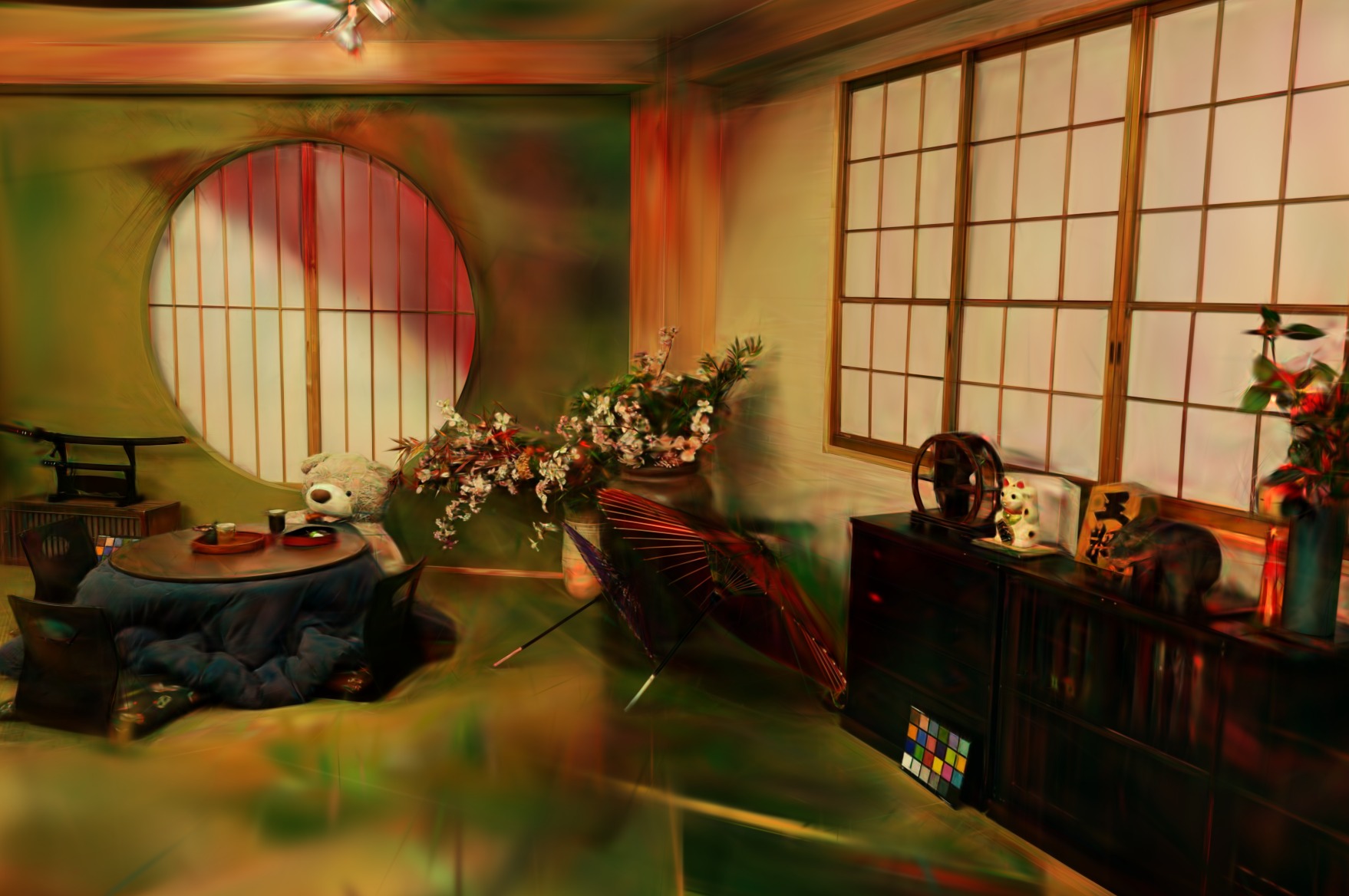
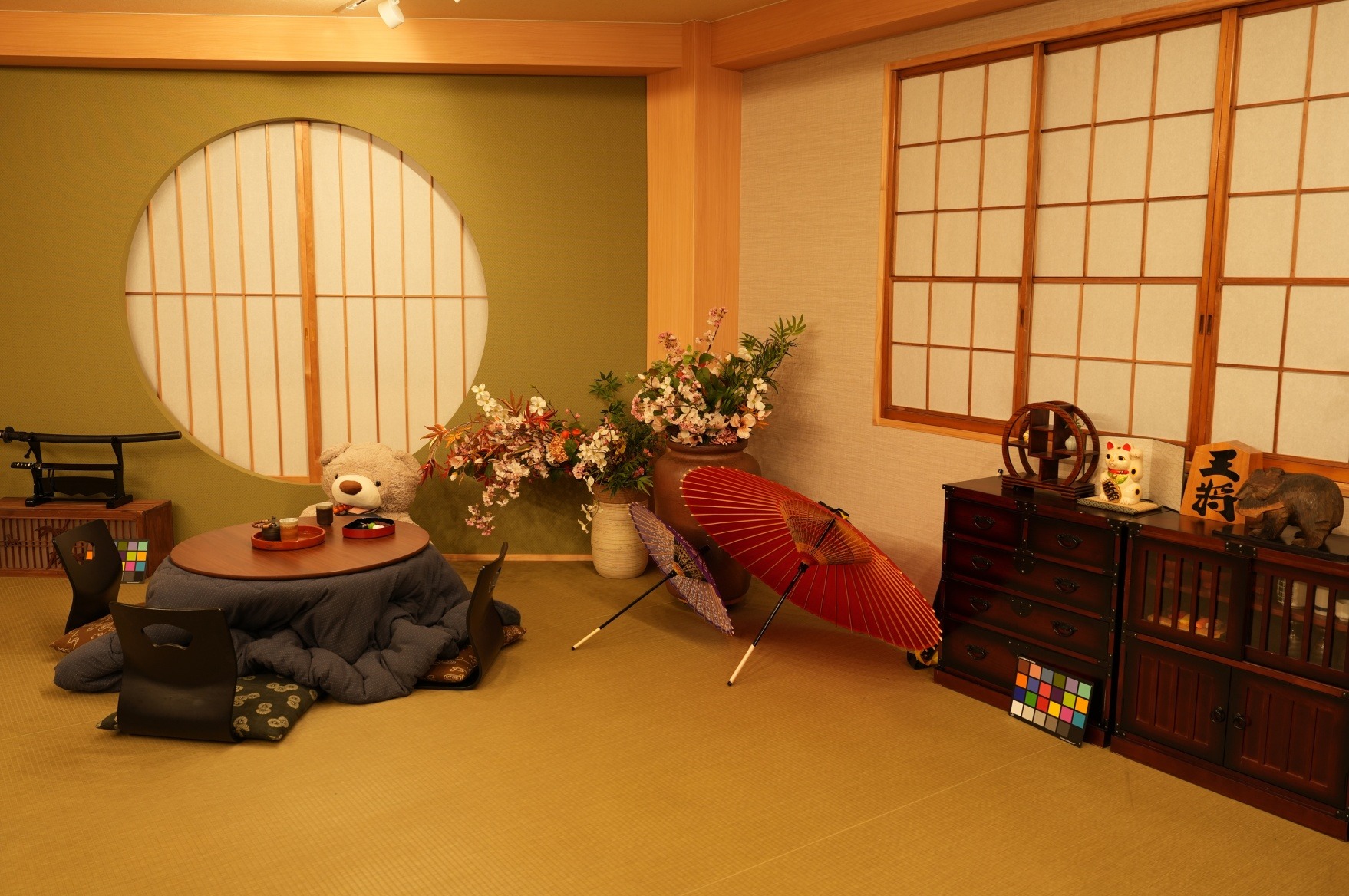
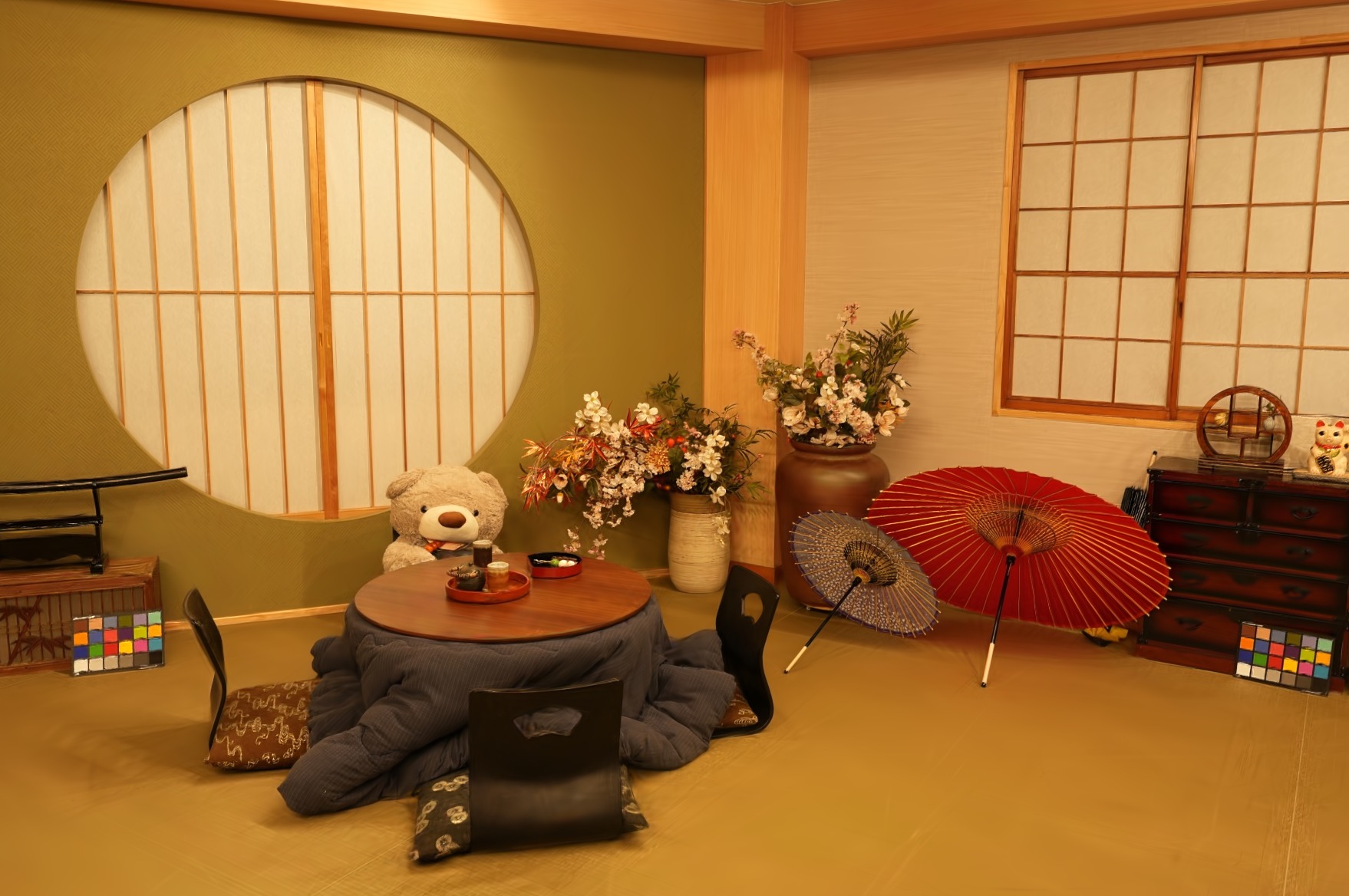
The same 30-view scene contains three diagnosed training conditions. Rather than suppressing every difficult observation with one uncertainty model, the refined typed model applies a cause-specific specialist while sharing one Gaussian scene representation.
Left to right: Raw 3DGS · WildGaussians · Oracle typed · Refined typed. All receive the same 238 frames sampled from one interpolated camera path at 800×532; most frames lie between captured views.
Five clean held-out views
The following targets are never used during training and are shared across every method.
All rows use the same Graphdeco evaluator and VGG-LPIPS implementation. WildGaussians was trained with appearance and exposure MLP enabled, DINO uncertainty enabled, and sky Gaussians disabled.
Method
PSNR ↑
SSIM ↑
LPIPS ↓
Raw 3DGS
16.044
0.633
0.458
WildGaussians
12.803
0.651
0.531
Oracle typed
28.076
0.839
0.242
Refined typed
27.985
0.838
0.243
Result: refined typed gains 11.94 dB over Raw and 15.18 dB over WildGaussians. It is only 0.090 dB below the reference-mask Oracle, with SSIM differing by 0.0007 and LPIPS by 0.0015.
Synchronized individual videos
Raw 3DGS
WildGaussians
Oracle typed
Refined typed
Trajectory construction
A translation spline and smooth SO(3) rotation interpolation through the 30 ordered training cameras, followed by reverse traversal for a continuous loop.
Six trajectory checkpoints
Interpretation
General uncertainty suppression is not sufficient when exposure changes should be modeled rather than rejected.
Typed routing preserves useful exposure observations while masking only spatially localized transient contamination.
The small gap to the reference-derived mask Oracle indicates that the refined semantic masks recover nearly all of the available mixed-cause performance.